ConvoCoach - AI-Powered Conversation Practice Tool
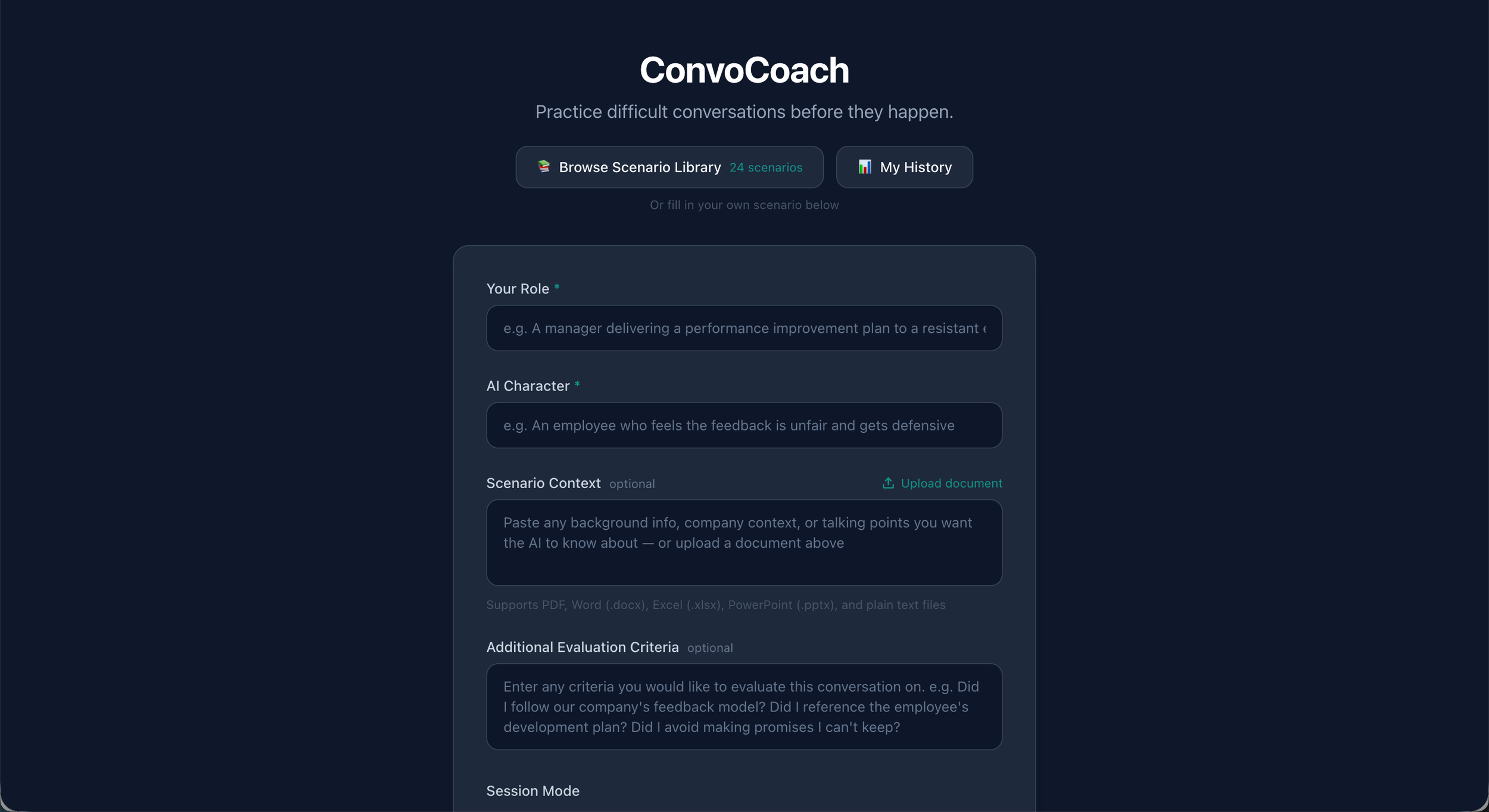
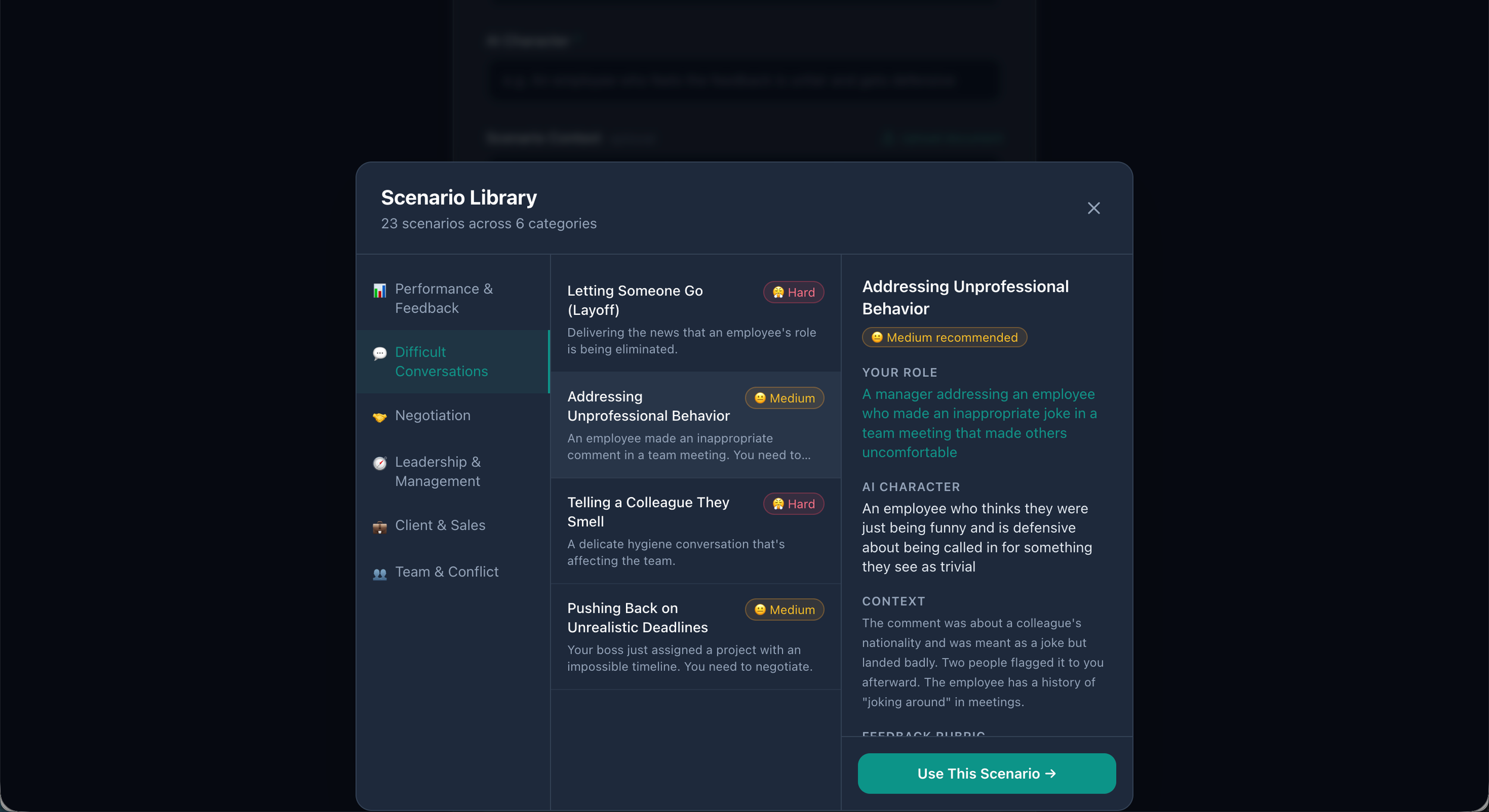
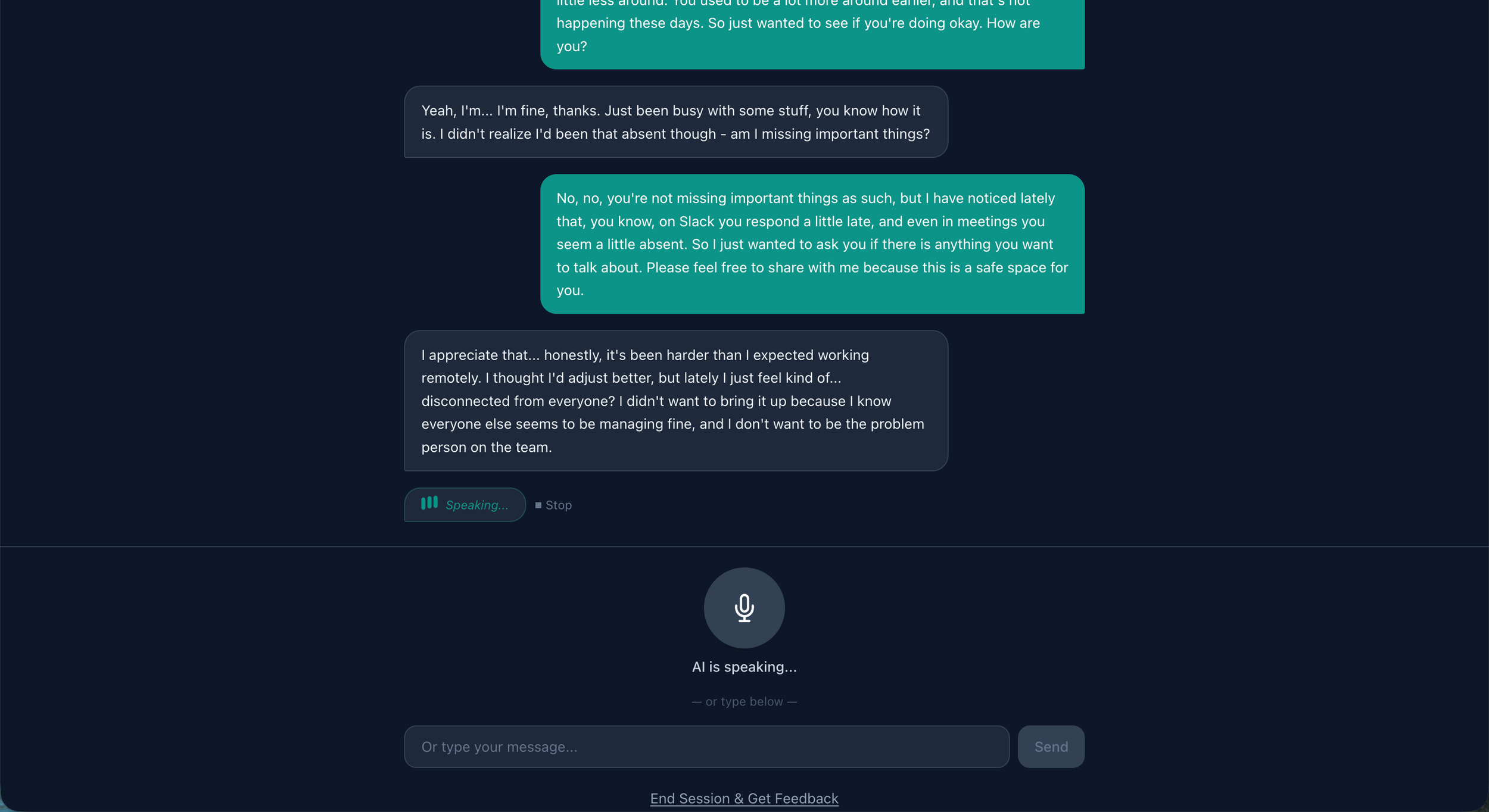
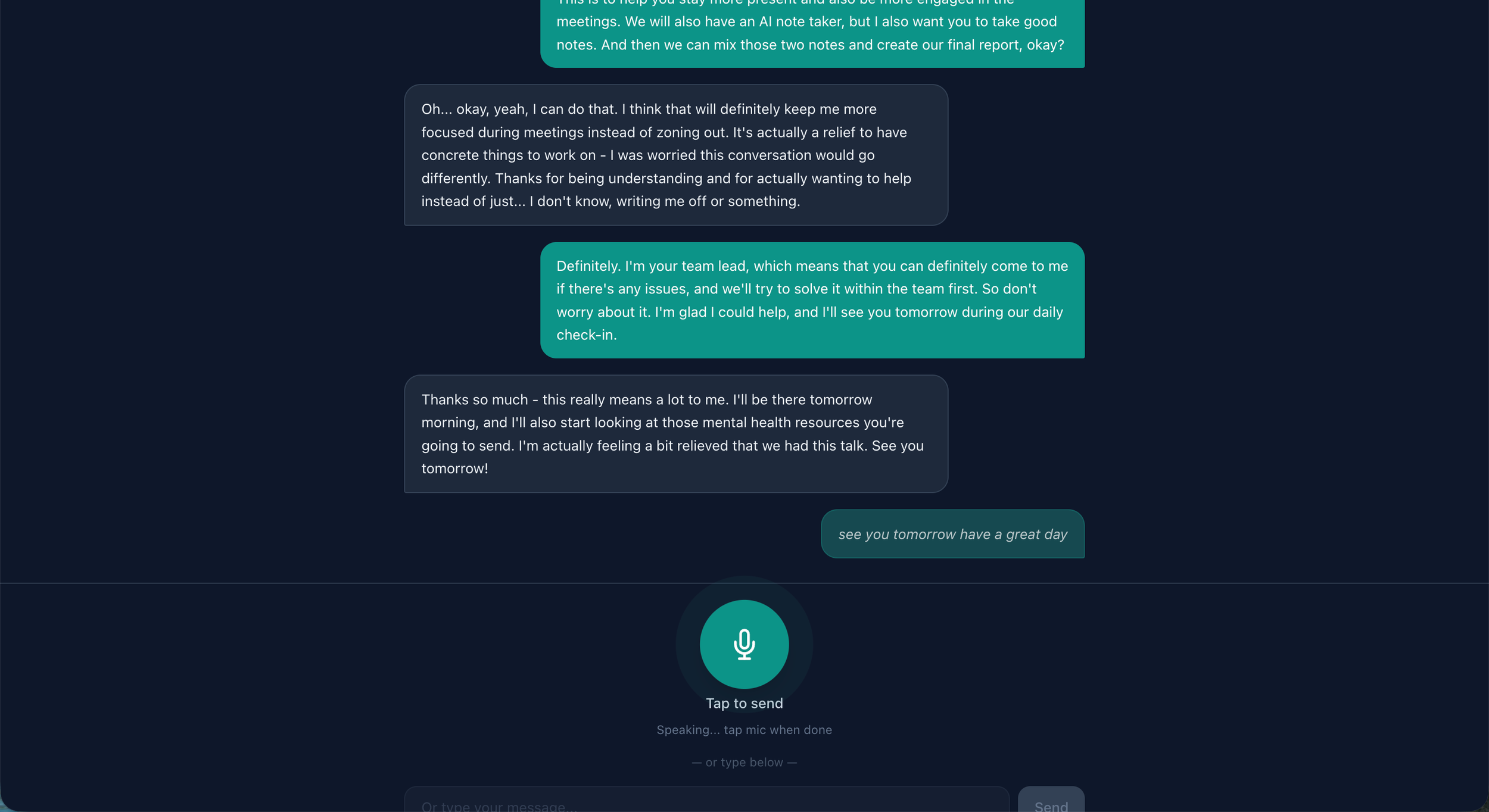
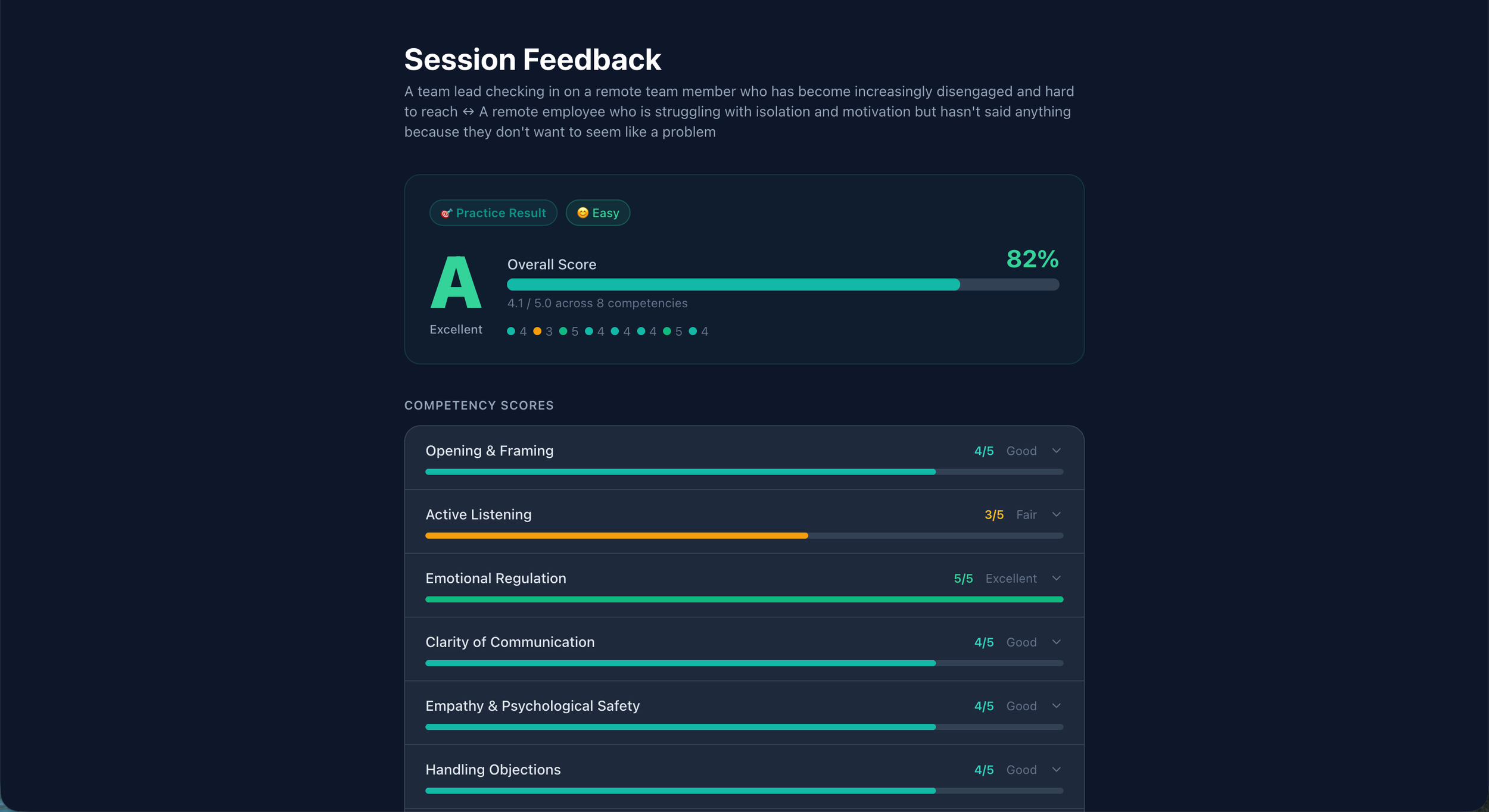
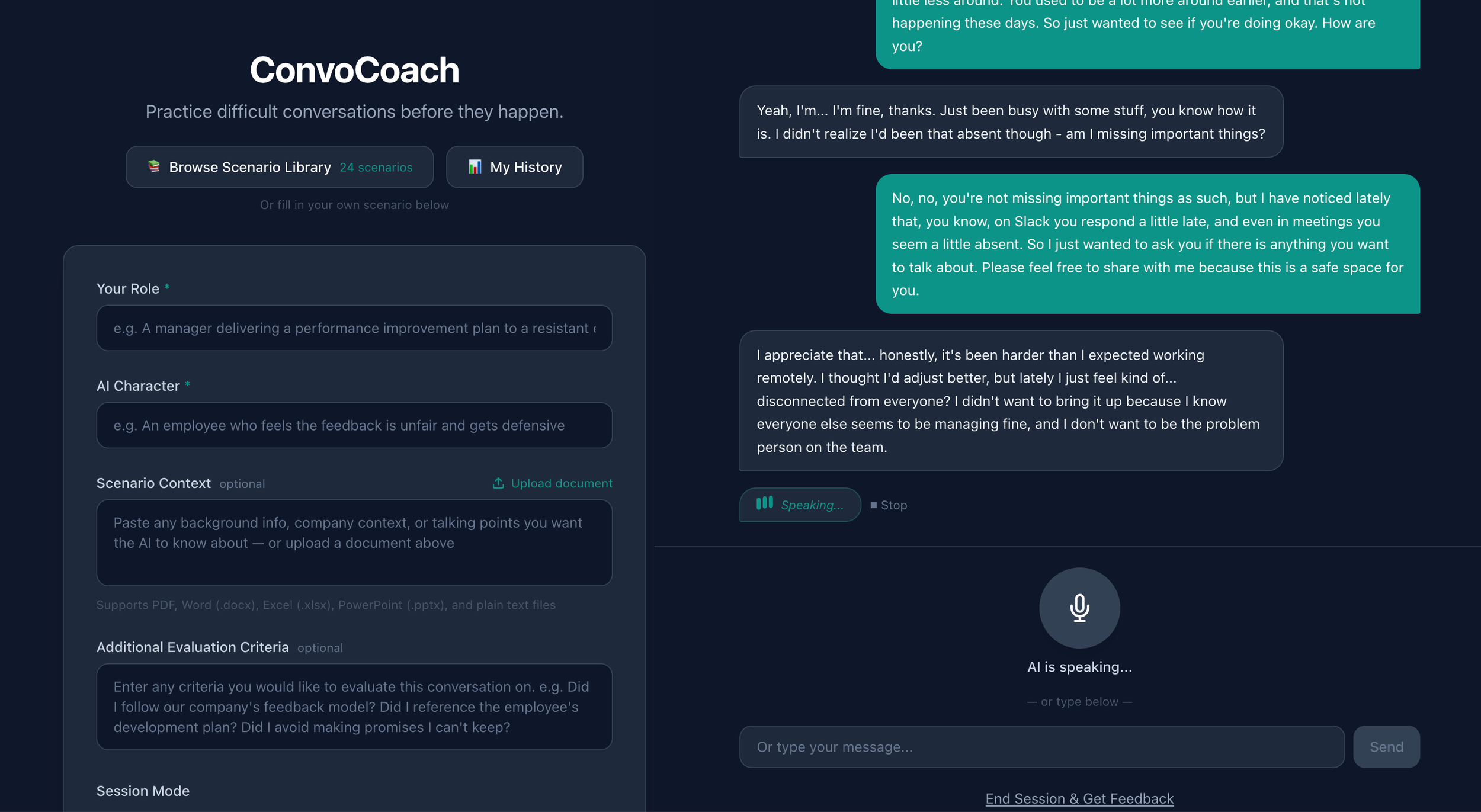
ConvoCoach is a working, voice-enabled practice tool that lets professionals rehearse high-stakes conversations before they happen. A user describes their role and the character they want to practice against, sets a difficulty level and session mode, and has a real back-and-forth spoken conversation with an AI playing the other side. At the end of every session, the app scores the conversation across eight competencies, delivers coach feedback with specific references to what was actually said, and generates a downloadable PDF report. Twenty-four pre-built scenarios across six categories are ready to use out of the box, or users can define their own scenario, upload a company playbook, and set custom evaluation criteria.
The Idea Behind It
Most people struggle with difficult conversations, not because they lack knowledge. They know they should listen, stay calm, and lead with empathy. The problem is that knowing and doing are not the same thing. That gap only closes through practice, and practice requires a safe place to fail.
Traditional role-play training is resource-intensive and inconsistent. It needs a facilitator, a willing partner, and enough psychological safety to attempt something in front of a colleague you are not yet good at. Most of the time, those conditions do not come together. ConvoCoach removes those barriers entirely.
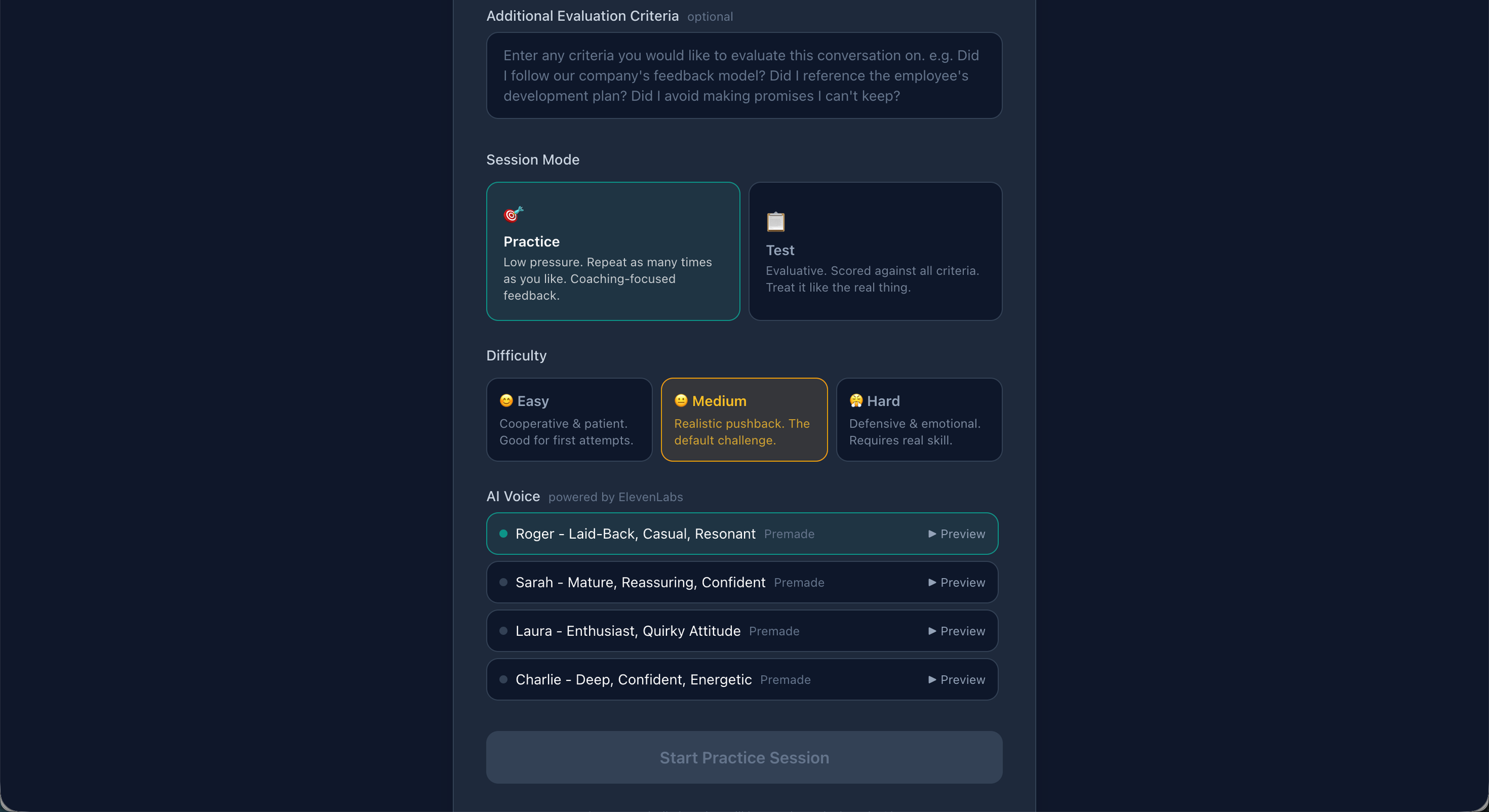
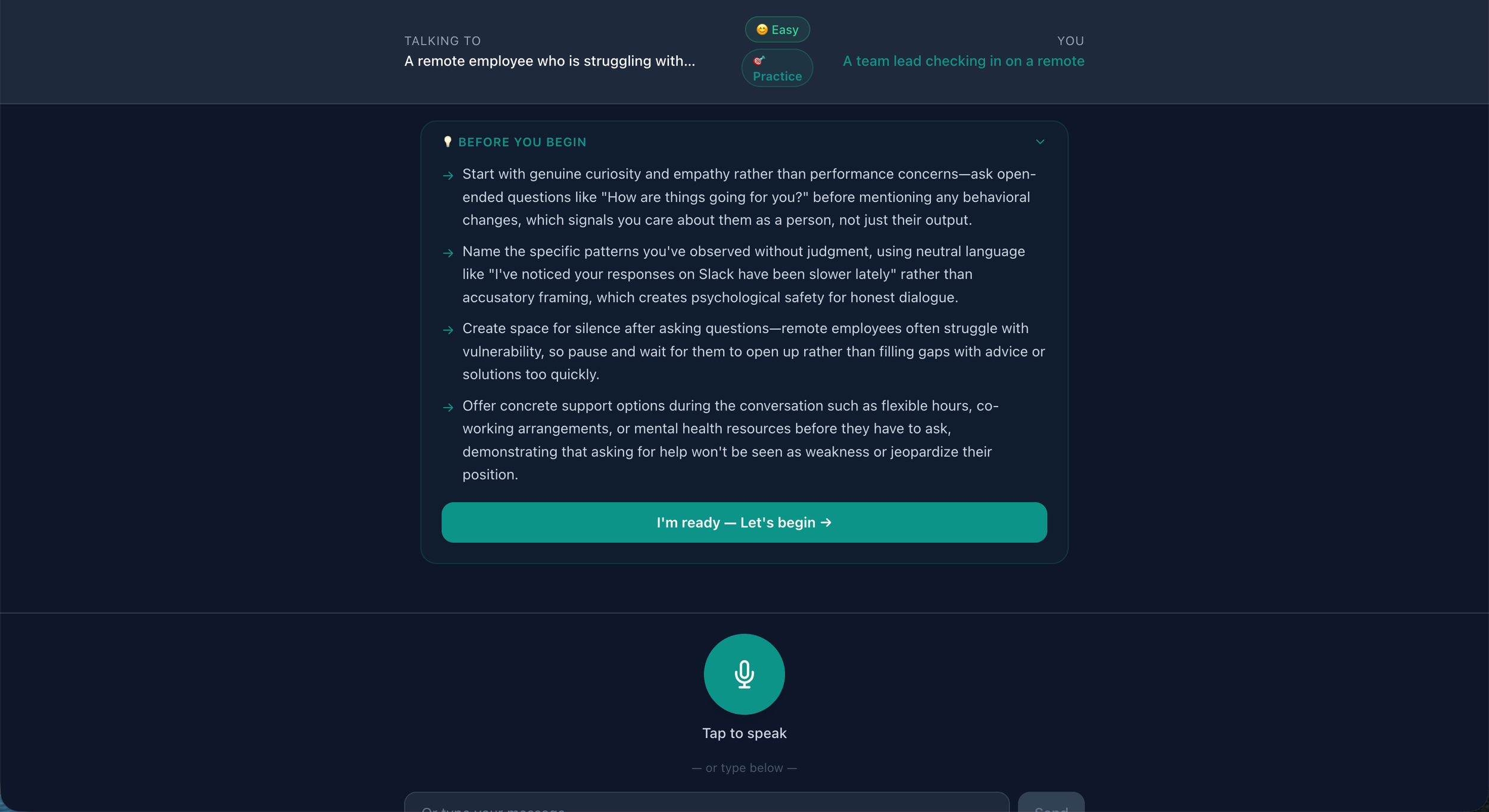
The instructional choices inside the tool are deliberate. Practice and Test modes exist because learners need both: a low-stakes space to experiment and a separate space to find out whether the practice has transferred. The three difficulty levels allow scaffolded progression, building the pattern at a manageable challenge before raising the stakes. The "Before You Begin" tips serve as an advance organizer, raising the ceiling of each session before it starts.
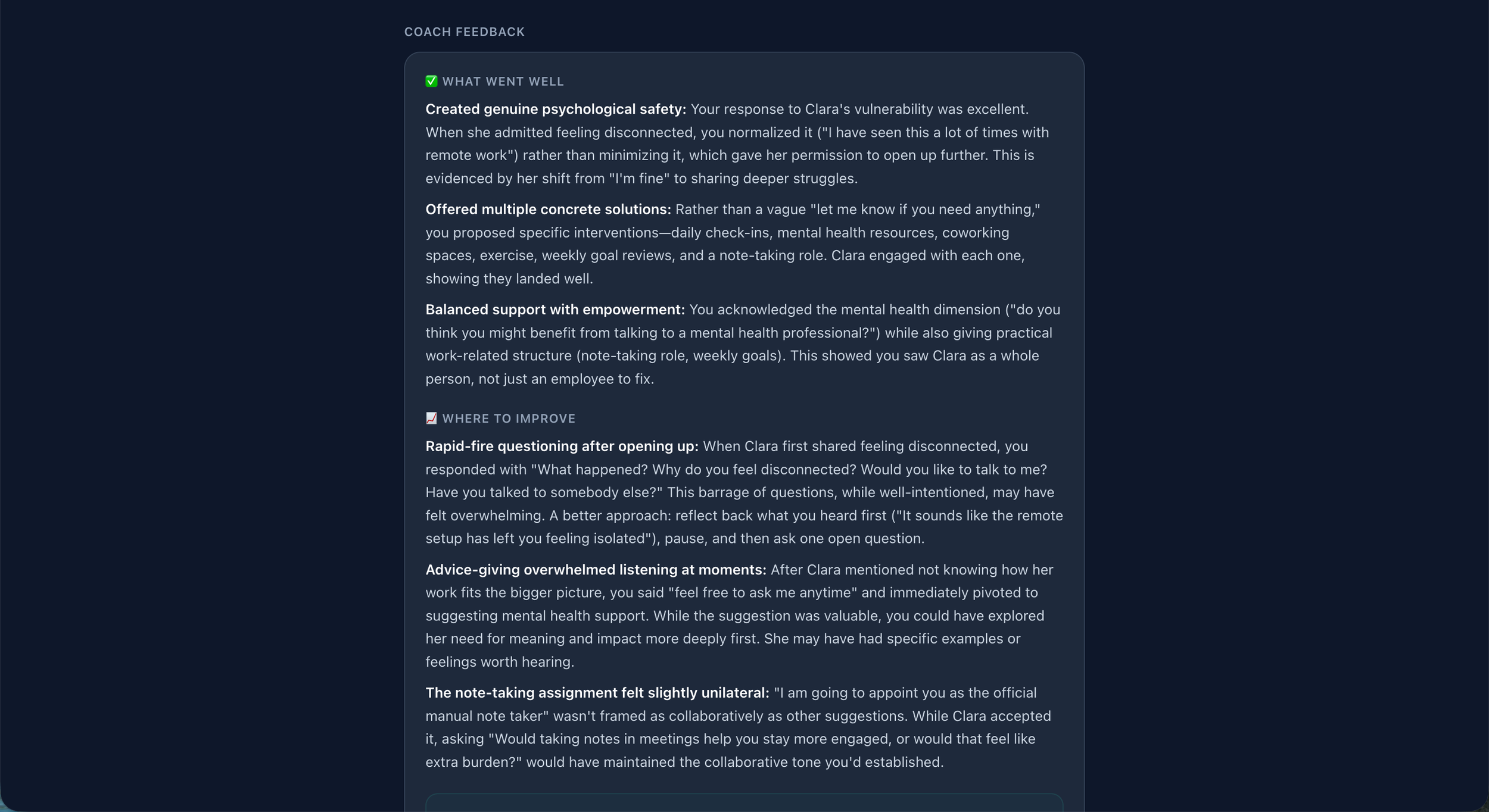
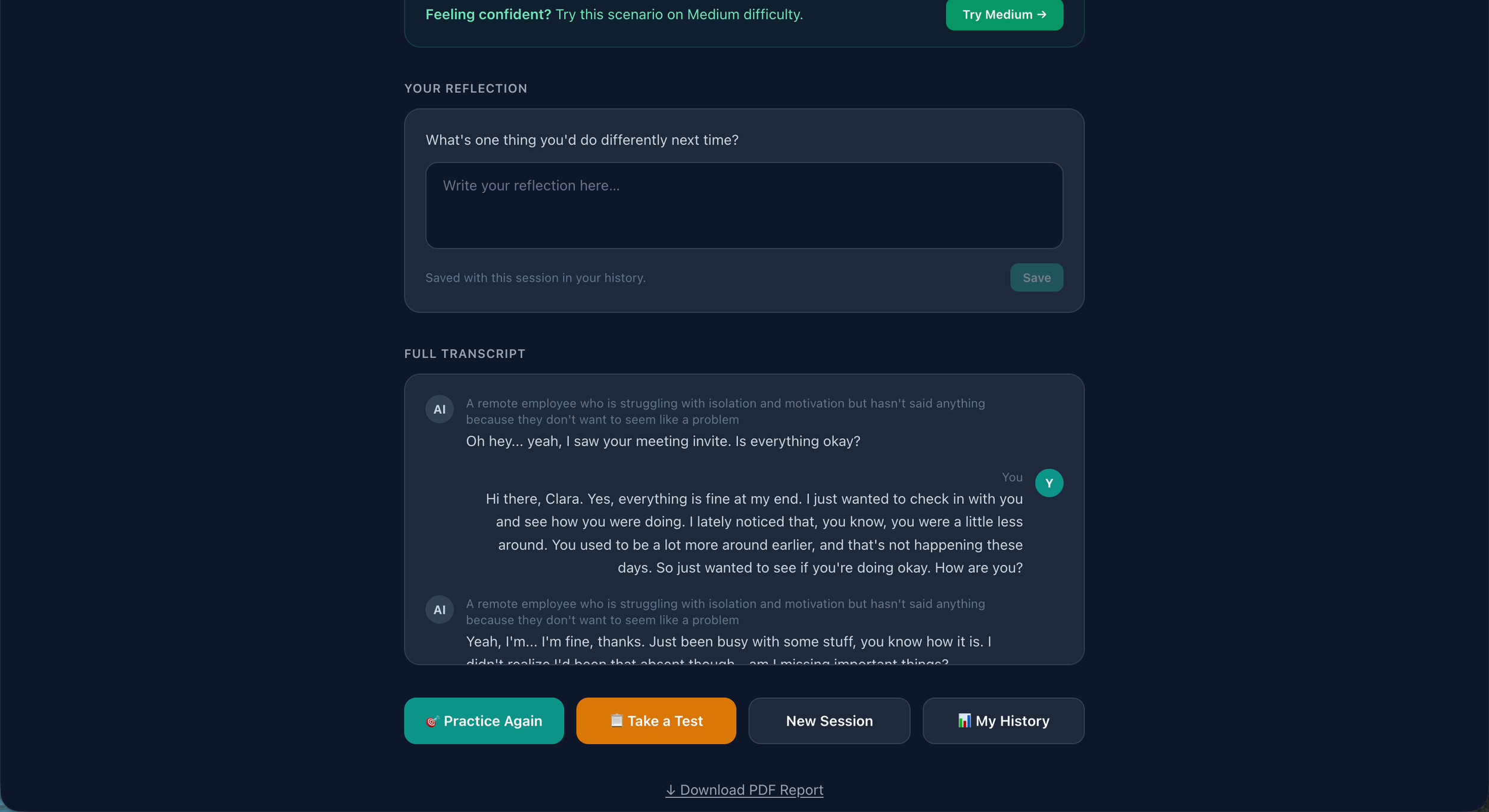
Feedback is specific and evidence-based throughout. Every coaching observation references something actually said in the transcript. The reflection prompt at the end asks the learner to name one thing they would do differently, shifting feedback from something passively received to something actively processed.
Click the image to access the app 👉
Software Used
Claude Code, Claude API (Anthropic), Vercel
Highlights
24 pre-built scenarios across 6 categories: Performance and feedback conversations, difficult conversations, negotiation, leadership and management, client and sales interactions, and team conflict. Each scenario arrives pre-loaded with roles, full context, a recommended difficulty level, and a feedback rubric. Users can also build their own from scratch or upload a company playbook as context.
Practice and Test modes designed around how skill-building actually works: Practice mode is low-stakes, coaching-focused, and repeatable as many times as needed. Test mode is evaluative and scored. The distinction exists because learners need both: a space to experiment without consequence and a separate space to find out whether the practice worked.
Three difficulty levels for scaffolded challenge: Easy puts the learner against a cooperative, patient character. Medium introduces realistic pushback. Hard is defensive and emotionally charged. The levels allow a learner to build the pattern at a manageable challenge level before raising the stakes progressively.
Voice-enabled with multiple ElevenLabs AI voices: Learners speak their responses naturally rather than typing. The AI character responds in a chosen voice, with multiple options previewable before the session begins. A text input is also available for accessibility and quieter environments.
Competency-based scoring across 8 dimensions: Opening and Framing, Active Listening, Emotional Regulation, Clarity of Communication, Empathy and Psychological Safety, Handling Objections, Goal Achievement, and Closing. Each is scored on a 5-point scale with a qualitative label and a color-coded progress bar.
Coach feedback grounded in the actual transcript: Every observation in the feedback references something specific that was said during the session. The app identifies what worked, names what could be stronger, and offers one concrete suggestion to try next time. No generic commentary.
A reflection prompt that closes the learning loop: After reviewing feedback, the learner is asked to write one thing they would do differently next time. The response is saved to the session history. This addition shifts the experience from consuming feedback to processing it actively, which is where learning actually sticks. NOTE: Session history is stored locally on the device - no data is sent to a server or third party.
Downloadable PDF report: Scores, coach feedback, and the full conversation transcript are available as a PDF. This makes ConvoCoach viable in formal training contexts where a facilitator or manager wants a record of practice performance over time.
Built in Claude Code, powered by Claude API, deployed on Vercel: A fully deployed, working application demonstrating real AI integration from concept to production. Not a mockup or a demo with a screenshot behind it.